Strong and Weak

A couple of my friends recently recommended Andy Crouch’s book, Strong and Weak: Embracing a Life of Love, Risk & Flourishing.  So far, I’m enjoying it.
Strong and Weak Cover

God wants us to be flourishing, as evidenced in Jesus’statement of his life’s purpose, “I came that they may have life and have it abundantly.”  Obviously, the Biblical view of flourishing differs from what the worldly view of flourishing would be.  Real flourishing is not dependent on wealth or even our physical health.  It involves a high degree of authority (defined as the capacity for meaningful action) and also vulnerability.  Vulnerability can be defined as exposure to meaningful risk.

The author uses the simple 2 x 2 grid below to explore flourishing and the other alternatives of exploiting, withdrawing and suffering as well.
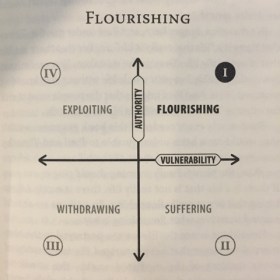
Strong and Weak 2 X 2 Diagram

Many of us find ourselves withdrawing in order to keep ourselves and our loved ones safe.  As I have been reading this book, I thought about something that I wrote before we left for two years of missionary work in Argentina called, “Safe or Brave”.  We felt like God was inviting us to follow Him in a new level of sacrifice and risk to do what we could to be a blessing to the materially poor in Latin America.  It was a long process and it was a very strange thing to leave my secure job, sell our cars and half our stuff and move to Argentina with our three young boys (that was eight years ago).  Here is what I wrote to myself (from the perspective of God) as I thought about staying safe or being brave:


Safe or Brave?

What’s it going to be, Chris?  You have had moments of risk and bravery in your Christian journey, but you generally kept relatively safe.  You have a conservative nature.  But, I am calling you to take a huge risk with your life because I want to use you and your family in new and exciting ways.  I will not force you to step out.  I only knock on the door and invite you to join Me.  You can stay safe and live out a good life that honors me.  But, I have more for you.  But you must take a big step, which feels like a leap to you.  But that leap is, ironically, the safest thing to do.

The deep hunger in your soul to help others, to represent me to the needy grows.  I have put that in your heart.  How can you sit at your desk trying to figure out the latest Cobra regulation, do a financial analysis or add up the checks?  Don’t you want more for your life?  Don’t you yearn for more?  Come, an adventure awaits you.  But, you will only be given enough to get through each day. 

Stop worrying about your kids, about a fallback plan, about your retirement savings, about security.  I will take care of you, and being used by me for my glory is fulfilling what I made you for.  Forget about all of the practical concerns and anxieties for now.  Each day has its own trouble, and you do not need to worry about the future. 

So, how about it?  Will you follow me to the ends of the earth if I ask you to go?  Are you willing to let me be in charge?  Will you trust the One who made you to take care of you and your family?  Come, adventure awaits.  I await.  Come with me and I will show you great and mighty things which you do not know.  It’s okay for you to count the cost.  But, once you have then come.  You have no idea what I would like to do with your life.  I want to use you in ways you never imagined.  I know you.  I watch you.  I’m with you there in your office.  Your “true self” that I created you to be is in hibernation.  But, I’m here to wake you up so you can be alive.  I mean really alive! 

I love you and I want the best for you not just what’s good or okay.  And, I have prepared you and grown you for such a time as this.  It’s time to step out, to respond to my invitation.  I will not force you.  I will only invite you.  You must come on your own free will.

Be brave.  Be strong and courageous.  I know that you have a brave heart.  Come and live a brave life.  Put your big brave heart into action. 

I’ve only given you one chance to live out your life on earth.  Make it count.  Don’t waste your life dealing with pettiness.  I have great things to show you.

If you close your ears and your heart to my invitation, it might be harder to hear me when I speak to you, when I call you next time.  Let’s go.  It’s time.  I’m on the move and I want you with me.

Trust me…

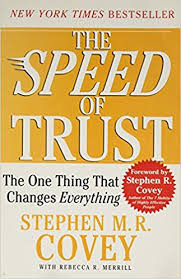
I’m enjoying Stephen M.R. Covey’s book, The Speed of Trust.  His thesis is that trust is the factor that changes everything in a business, non-profit organization/church, team or family.  In a business, a high degree of trust saves time and money.

Yuriy Seleznev_Trust_Shutterstock

Trust is not only a matter of character, but also of competence.  By working from “the inside out” you can actually change the level of trust in any relationship.  The first step, however, is to build self trust.  What does that even mean?  It is the confidence we have in ourselves – ability to achieve goals and to keep commitments.  We need to first become a person who is worthy of trust – key principle is credibility.

Covey discusses four “cores” of credibility.  The first one is integrity.  This is integratedness, walking your talk, being congruent inside and out.  Someone with integrity acts in accordance with his or her values and beliefs.  Some of the biggest violations of trust are violations of integrity.

the speed of trust book

In order to increase your integrity, you can:

  • Make and keep commitments to yourself
  • Stand for something
  • Be open

In the area of making and keeping commitments to yourself, we increase our self-confidence every time we make a large or small commitment to ourselves.  In order to do this, we should not make too many commitments (don’t over-commit!).  We should treat the commitments we make to ourselves with as much respect as you do with your commitments to others.  Avoid impulsive commitments.  Lastly, if keeping a commitment becomes hard change your behavior to match your commitment.

A few of the personal areas that I think of related to making and keeping commitments to myself are:

  • Regular exercise
  • Depend on God and keep asking Him to help me see people how He sees them (and then treat them accordingly)
  • Lots of reading and discuss my reading with others
  • Do not become self-focused or act in my own self interest, but in the interest of others (starting with my wife and sons)
  • If I ever have a chance to spend good time with my sons (especially reading to them), do that and put other tasks aside to be done later
  • Follow through on what I say I will do
  • Stay organized

But, I know there are a lot more.  And, I want to keep thinking about this.  I’m curious what other people think of in terms of their commitments to themselves.

More Than Rivals

more-than-rivals-book-cover

What a great book!  I would highly recommend it, especially if you enjoy basketball.

I read this whole book in less than 48 hours since I couldn’t put it down.  It was a nice follow up story to a 570 page book on Plato and Aristotle (although good, a different kind of read).

We just finished the season of the San Marcos High School boys basketball team.  My two older sons were on the team.  They went undefeated in Channel League, won the CIF championship and made it to the second game in state.  It was truly a magical season, and it was about so much more than basketball.  I was so inspired by my sons and their teammates.  Their hard work, the way they worked together as a team, the way they drew the community together was amazing.  Every time one of them was interviewed, he would start talking about the other players and their contributions.  They all believed that the biggest reason for their success was their unselfish devotion to their team, their unity and love for one another.  They didn’t care who scored or shined in any particular game – as long as they stuck together as a team and worked together to win.  My favorite part of the home games was at the end of the game when the students would rush onto the court and my sons and their teammates would be jumping up and down celebrating with their fellow students and supporters.

Keep in mind that these are the same guys who didn’t win one of their league games their freshmen year!  Anyway, we were their biggest fans.  As the season rolled along, more and more of our friends and neighbors attended the games.  They kept coming back.

The whole basketball season was on the heels of the Thomas Fire in December and the mudslides in Montecito in early January.  They had numerous games and practices cancelled because of these tragedies, but they never gave up.  If you want to get a taste of what their season was about, check out sanmarcosbasketball on Instgram!

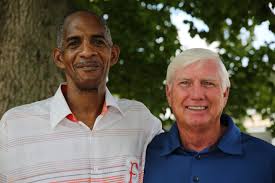
Anyway, back to the book.  The story is about so much more than basketball.  It shows how people can overcome years of prejudice and discrimination with love.  Two team leaders, one white and one black, help to save the town from disaster and set the direction for a future of equality and mutual respect.

Here’s a picture of the two real life heroes:

more than rivals image #2

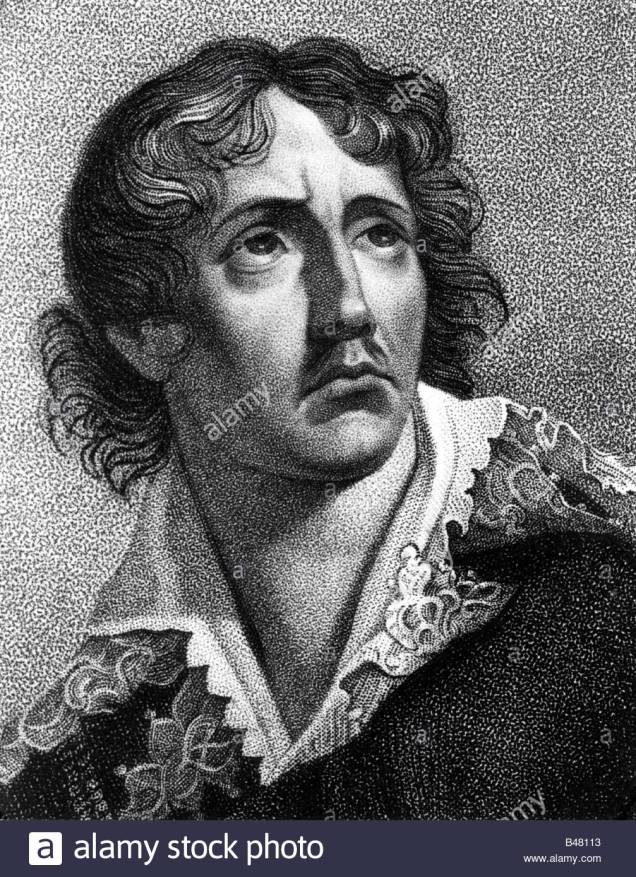
Boethius – Who’s That?!

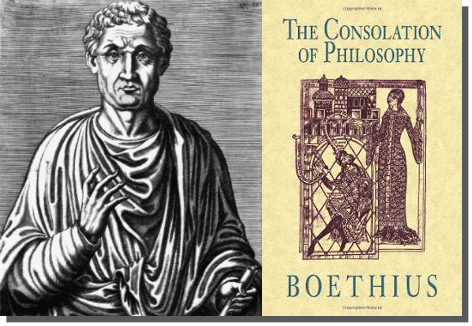
boethius-consolation-of-philosophy

Who is Boethius (and am I even pronouncing his name correctly)?  The book I am reading, The Cave and the Light: Plato Versus Aristotle and the Struggle for the Soul of Western Civilization by Arthur Miller, has a good section about him that has really piqued my curiosity.  Well, here is a brief Wikipedia summary just to get you up to speed:

Anicius Manlius Severinus Boëthius,[a] commonly called Boethius[b] (English: /bˈθiəs/; also Boetius /-ʃəs/c. 480–524 AD), was a Roman senatorconsulmagister officiorum, and philosopher of the early 6th century. He was born four years after Odoacer deposed the last Roman Emperor and declared himself King of Italy, and entered public service under Ostrogothic King Theodoric the Great, who later imprisoned and executed him in 524 on charges of conspiracy to overthrow him.[3] While jailed, Boethius composed his Consolation of Philosophy, a philosophical treatise on fortune, death, and other issues, which became one of the most popular and influential works of the Middle Ages.

First of all, I must confess that I am embarrased to admit that I have never read his most famous work, The Consolation of Philosophy (but I promise to add it to my reading list now!).  The book is about his imaginary death row conversation with a woman who appeared to him in prison before his death: Lady Philosophy.  Their conversation is an extended allegory about the ultimate meaning of life and death.

After growing up in the shadow of the Dark Ages, Boethius realized that Christian society by itself was not going to survive.  He was the first Christian thinker to realize that Plato and Aristotle were still indispensable to Western civilization.  They still provided an essential and rational framework for dealing with the real world.  He treated Plato and Aristotle as the essential anchors of a civilized education.  Boethius is linked indirectly to every college and university today that still teaches what his world, and ours, called the liberal arts.  Boethius believed that if we are going to deal with a complex and dangerous world, we had better be prepared.

It was only the relentless reproduction of Boethius’s works, by generations of forgotten monks and scribes, that allowed some fragments of Greek legacy to enter the Western consciousness.  His translations of Aristotle’s logic were especially important.  Boethius revealed that logic is not a remote ivory tower discipline but it thrusts us into the real world, by focusing on what we can say with certainty about the world around us the necessary relationship between language and truth.

Hat’s off to Boethius!

Hats offBoethius #2

Peter Abelard

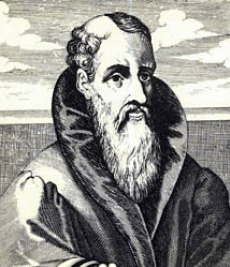
I’m about 200 pages into Arthur Herman’s book, The Cave and the Light: Plato Versus Aristotle and the Struggle for the Soul of Western Civilization.  I’m really enjoying it.  Yesterday I read about Peter Abelard.  I remember learning about him in college, but I do not remember his story.  He was an incredibly gifted man who was born in 1079.  His father, Lord Abelard of Le Pallet had a passion for learning in a time when most lay persons were illiterate.  He sent his seven year old Peter for lessons with a local grammaticus (a cleric who taught Latin).

Peter was brilliant debater and eventually opened his own school for learning logic, and at twenty nine years old he became the dominant intellectual figure in the city of Loches.  Young men came from across France to attend his classes.  He encouraged his students to collate the Church Fathers’ different opinions on specific passages from the Bible and to compare them with scripture to figure out which Church Fathers were right and which were wrong.  One of Peter’s famous sayings was, “By doubting we come to question, and be questioning we perceive the truth.”

Peter Abelard

Peter’s life had a tragic twist that I never remember learning about.  He fell in love with a 17 year old student of his named Heloise.  Peter was 40 at the time.  Heloise became pregnant, Peter offered to marry her and the father accepted.  However, after a secret marriage Peter insisted that Heloise enter a nunnery because he was afraid that if the truth became known it would ruin his career as France’s most glamorous philosopher.  After Peter was found to be visiting her at the nunnery and having sex again, her father sent a group of thugs to castrate Peter.  Such a sad story about a man that seemed to be an intellectual giant.

Peter’s legacy was that he opened the Middle Ages in new ways by giving the name of Aristotle and his logic a glamour that it never lost.  I think it would be interesting to read a biography of Peter’s tragic life.

Alejandro

I’ve really been enjoying reading the book, An American Family: A Memoir of Hope and Sacrifice by Khizr Kahn.  Khizr and his family are immigrants from Pakistan who become American citizens.  They go through many trials and tribulations, but they continually encounter kindness and help from Americans in the midst of their adventures.  I highly recommend the book.

As I have been reading the book, I reflected on the many people in Argentina who showed us kindness while we lived there for two years.  It was a challenging two years.  The culture is so dramatically different that I still struggled to understand it and to adapt even after two years.

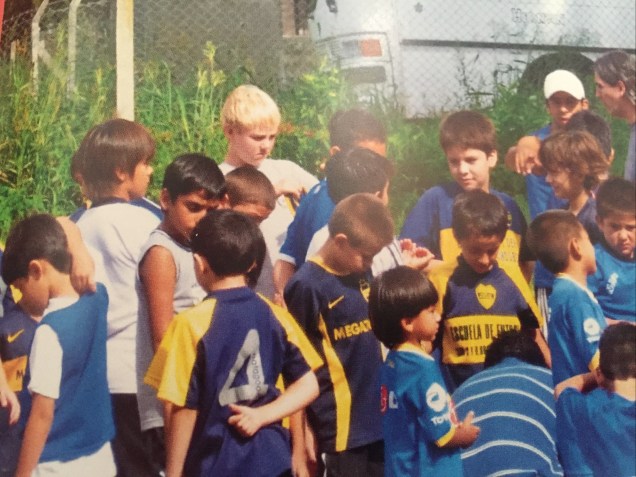
I’ve been thinking particularly about Alejandro.

Alejandro

I met Alejandro because my oldest son was playing on a soccer team with his son, Valentino.  I was breaking the social norms by being talkative to strangers and trying to make friends with the other dads who had kids on the team.  He helped to try to tow our beat up car when it broke down and help me find a mechanic I could trust (Tito).  He would regularly drive by our house to make sure we were okay.  One time our house alarm was triggered when we were not there and he went and found us.  When I sold our second used car, he came with me to protect me because I was paid in cash.  I could tell that he was serious and he would have done anything to protect me.  He advised me to be careful since the people from the car dealership had my address and knew I had cash.  He just always seemed to show up when we needed some help.  And, he helped us without expecting anything in return.

Alejandro told me shortly before we left Argentina that when he first saw me God told him to help me.  And, that’s what Alejandro did.  I will never forget his selfless care for our family.  I want to help others, especially those who are struggling with a foreign culture and environment the way Alejandro helped me.

david-soccer-in-argeninta.jpg

david-soccer-in-argeninta-2.jpg

Ethics

I would like to share a few ideas on ethics from Gregg Ten Elshof’s book, Confucius for Christians.

Here’s an excerpt from the Analects of Confucius (14:34), “Someone asked, ‘What do you think of the saying, ‘Requite injury with kindness’?  The Master replied, ‘With what, then, would one requite kindness?  Requite injury with uprightness and kindness with kindness’.”

According to Confucius, the good person must respond in context.  There is no fixed pattern of behavior and attitude that works in every circumstance.  We can observe from the gospel accounts that Jesus was sensitive to relational dynamics in his dealings with others.  Jesus doesn’t teach that one’s response to everyone should be the same – there are varying instructions unique to the kind of relationship being addressed (i.e. “Children, obey your parents…”).  (p. 49)

“He (Jesus) invites his disciples to follow him into the nitty-gritty circumstances of life in his time where his behavior is, one must say, sometimes really quite surprising and unpredictable.  He tells stories that illustrate the condition of the good and bad heart.  But he does not seem terribly interested in the project of articulating anything like a completed moral code.”  (p. 58)

“But, for those of us who’ve been caught up in the attempt to codify the ethics of Jesus, the Confucian emphasis on context-sensitivity and the centrality of the master-apprentice relationship for the civilization of the moral life may call attention in a new way to the emphasis on discipleship in Jesus’ strategy for bringing his students into the Way.” (pp. 59-60)

“Reflection on the Confucian Way can alert us to the degree to which we’ve overestimated the efficacy of codified ethics for making actual moral progress.” (p. 62)

These ideas are a good reminder to me that following the Way of Jesus for me must be worked out and lived each day in the specific situation(s) that I find myself in.  It’s not so simple to study Jesus’ life and then follow a code.  He wants us to stay connected to Him in relationship and following Him is an adventure.  We need His wisdom, presence and the power of His Holy Spirit to actually act and think in ways that are most pleasing to Him in the circumstances that we find ourselves in each day.  This can be fun and exciting and also challenging.  A fun recent example for me is a friendship that I have started with a man who is so different from me.  Another example is a challenge that I had to overcome to send a difficult letter to a friend who is continuing on a self destructive path.  It was a hard letter that I didn’t want to send, but I believed God wanted me to communicate some truths to this friend (in a spirit of love, of course).

Confucius for Christians? Family and Learning

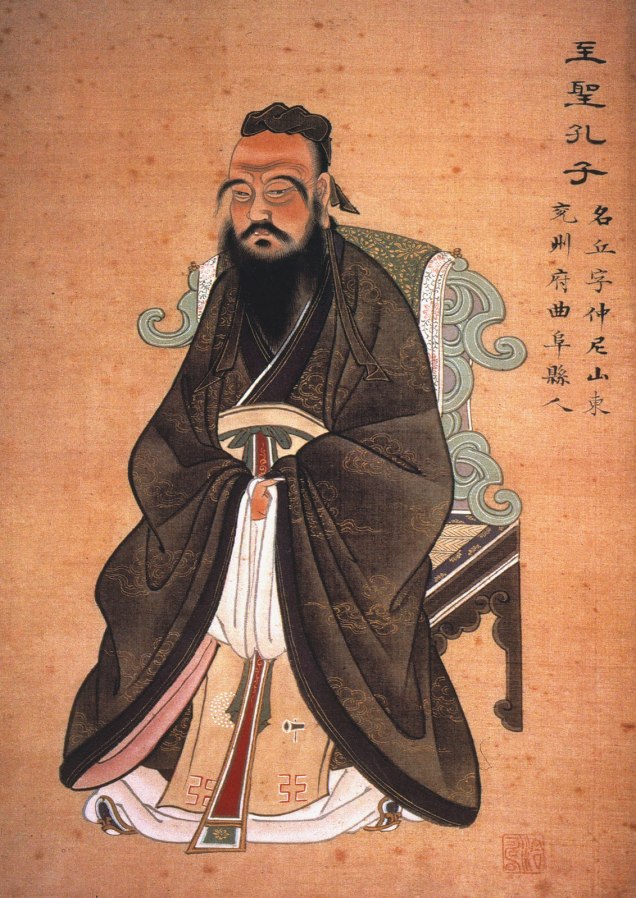
Konfuzius-1770-CC-wikimedia-1

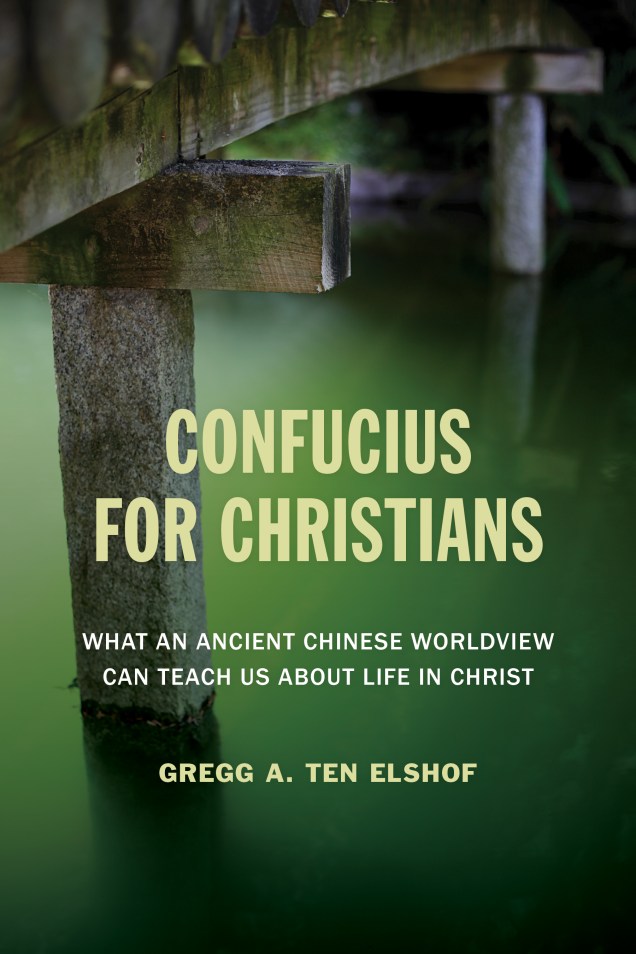
My friend Gregg Ten Elshof is a philosophy professor at Biola University.  When we visited the school last year with my two oldest sons, Gregg allowed us to sit in on his class in Chinese Philosophy.  He also gave us a copy of his book, Confucius for Christians.

I finally read this book at the end of last year and found it very challenging (I highly recommend it).  In the book, Gregg interacts with Confucianism as a wisdom tradition and “seeks to experiment with reflection on perennial questions of human interest with the teachings of Jesus and Confucius in mind.” The idea is to see what insights can be gleaned from Confucius that might help us to be better and more mature disciples of Jesus.  To many, this might seem a strange project.  But, I found the insights and ideas very helpful.  I will share some a few examples.

Confucius for Christians

Confucius stressed the importance of family and if we wish to grow in goodness, we must grow in our ability to be together.  And, filial piety is at the center of virtue for the Confucian.  “Far from falling into a kind of clannish exclusivity that prevents our caring for anyone beyond those in our families (this would have been more of a tendency with first century Jews in the time of Jesus), we’ve neglected to appreciate the centrality of family for loving those beyond it well.  We’re trying to establish significant and healthy relationships with friends, neighbors, superiors, and the world without having made much progress in the mastery of the basic relational dynamics given us insofar as we are fathers, mothers, sons, daughters, older and younger siblings, and spouses.  We’re tempted to think that we can somehow manage to love the world without having learned to love well those whom have been given to us as family.  Reflection on the Confucian emphasis on filial piety can function as a kind of corrective here.  The Confucian would remind us that if we wish to love the world, we’ll need to attend carefully to the ‘root’ of love – the root of goodness.  We’ll need to continually work at wholeness in the basic familial relationships.” (p.19)

I want to live out my faith in Jesus with my family.  Sometimes it is hard in the midst of those who know best your weaknesses.  God help us.  Let our lights shine brightly first in our homes.

On the topic of learning, the Confucian deeply values a life characterized by continual learning.  Knowledge is only a byproduct of having pursued and fallen in love with that thing which is most important – a life of learning.

“We forget that at the center of the Christian Way is the invitation to be a follower.  Conformity is the very heart of Christian discipleship.  Leadership, if and when it happens, is accidental to the Way of Jesus.  Everyone is called to be a follower.  Whether or not we find ourselves in positions of leadership, it is our ability to follow that will dictate our success as disciples.” (pp. 40-41)

“To love learning is to embrace unknowing, uncertainty, incompleteness, impotence and the submissive posture of a follower.” (p. 42)

“We would do well to assiduously avoid the acquisition of new information until we’ve made some progress in the direction of those things we’ve already learned.” (p.44)

That last quote is especially challenging for me.  I have so much good knowledge of the Bible.  I find it fun and interesting to try to understand and learn new things about the Way of Jesus and I can continue in that.  But, I would do well to put most of my energy into an applied kind of learning – learning how to live out what I already know and understand pleases God.  This is an active learning by doing.  I want to make that one of my goals in 2018 – thanks for the reminder and challenge, Gregg!


Daily Quotes

I decided to send my three sons and wife a quote, or short excerpt from a book, each day in 2018.  It’s been fun so far to look through my books the night before in search of a quote that I enjoyed.  Here are some examples from the last few days:

Quote from Shane Claiborne (from his book Red Letter Revolution: What if Jesus Really Meant What He Said) written with Tony Campolo):

“I’ve learned that prayer is not just about trying to get God to do what we want God to do but about getting ourselves to do what God wants us to do.  Training ourselves to be the kind of people God wants us to be.”

“A lot of times we use prayer as a way of excusing ourselves from action.  You know, when you share a deep dilemma you face and someone says, ‘I’ll pray for you’, often they are really sincere and don’t know what else they can do.  And we do need to pray for each other.  But sometimes when someone says, ‘I’ll pray about that’, it is code for ‘I’m not going to do anything else for you.’  So we have to be careful that prayer and action go together.  If we hear someone asking for prayer over and over because they need work done on their leaky roof, we should keep praying, but we might also get off our butts and get some people together to fix the roof!  When we ask God to move a mountain, God may give us a shovel.”


Quote from Jacques Ellul’s book, The Subversion of Christianity:

“Always – and today more than ever – we like things we can count on, obvious certainties, a secure future, simple duties, a clearcut line of conduct.  The uncertainty of things like love and grace horrifies us.  Saying that God loves us grants us no reassurance.  We would prefer it if he gave us fifty things to do, so that when we had done them we could be at peace.  We do not want an ongoing relationship with God.  We prefer a rule.  It does not satisfy us that God shows grace to us or frees us.  We prefer to bind him by our virtues and to be sure that he has no freedom to do with us as he chooses.”

“Thus we have unceasingly tried to objectify our relationship with God.”


Quote from Eugene Peterson’s book, Christ Plays in Ten Thousand Places:

“God’s great love and purposes for us are all worked out in messes in our kitchens and back yards, and storms and sins, blue skies, the daily work and dreams of our common lives.  God works with us as we are and not as we should be or think we should be.  God deals with us where we are and not where we would like to be.”


The Last Two Books of 2017 – Wilberforce and Jamberry

When I woke up yesterday morning, I had two more books to read before 2017 was over.  I picked a small book about William Wilberforce called A Journey Through the Life of William Wilberforce by Kevin Belmonte.  It was only 120 pages and it had LOTS of pictures.

Wilberforce

He is such an inspirational figure whose life had a immense impact on the lives of millions of people.  Among other things, I learned that his sons wrote a book about him.  I am adding that one to my 2018 books to read list – The Life of William Wilberforce by His Sons.

And, since I had less than an hour before our friends arrived to celebrate New Year’s Eve with us I had to choose book #40 carefully.  I chose a book that I used to read to my sons when they were little: Jamberry by Bruce Degen.

Jamberry

Very fun!  My two youngest boys (now 12 and 15) were good sports and allowed me to read it to them (just like old times!).

My first new book started in the New Year is the updated and expanded version of Evidence Demands a Verdict by Josh McDowell and Sean McDowell.  We’ll see how it compares to Jamberry!  I’m excited about my reading in the New Year.

Evidence That Demands a Verdict