The Vanishing American Adult

Peter Pan

I’ve really been enjoying The Vanishing American Adult book.  I do admit that it can be a bit depressing/discouraging.  But, it is also giving me some good parenting ideas and a sense of urgency to make sure that we are preparing our boys for manhood/adulthood and not a perpetual adolescence.

Today I read chapter eight called, “Build a Bookshelf”.  Here are some good excerpts:

  • “Critical, engaged reading skills are not a luxury, but rather a necessity for responsible adults and responsible citizens.  America’s future depends on the kind of thinking that reading presupposes and nourishes – and such thinking demands a rebirth of reading.”
  • “Becoming truly literate is a choice.  Reading done well is not a passive activity like sitting in front of a screen.  It requires a degree of attention, engagement, and active questioning of which most of our children currently have a deficit.  Our culture’s ever-present distractions – the obsessive appeals to immediacy…conspire to blunt our curiosity and distract us from sustained thought.”
  • Jefferson wrote to Adams, “I cannot live without books.”
  • “Bloom similarly concluded that the ‘failure to read good books…both enfeebles the vision and strengthens our most fatal tendency – the belief that the here and now is all there is.’ Nonetheless, he resigned himself to a mere reclamation effort, believing that the larger quest for a common culture was doomed.
  • “A national canon of shared great works – focusing first on what unites us as Americans rather than what divides us – could help us recover a sense of shared meaning and shared purpose today.”

It’s important to get our kids engaged in reading by helping them to find books that they are interested in.  It’s also important to expose them to the great works of Western literature.  I find that this is the challenging part as the boys get older.  I want to be careful not to “assign” too much reading.

What if all of our kids took half or a third of the time they spend on their devices and used that to read?  I think that this would revolutionize their lives and our society.

This chapter has been an encouragement to me to continue to pursue good reading and model that for my boys.  Also, it helped to awaken my desire to talk about what I am reading with others.  Finally, it motivated me to plan to talk to my wife about making more of a plan to have the boys read good books.

Let’s see a good Captain!

br0714_russell

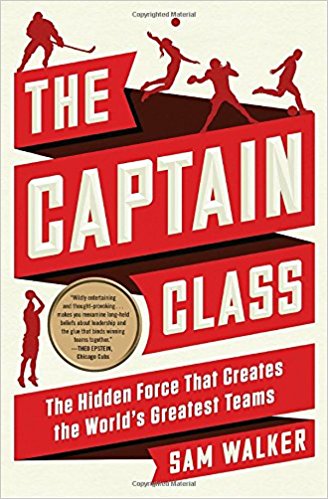
My oldest son and I are really enjoying the book, The Captain Class by Sam Walker.  He examines the 16 most elite sports teams of history (across team sports with at least 5 players) in order to try to determine what makes these teams the greatest of all time.  He was shocked to discover that it was not consistently any of the following expected factors: good coaching, presence of a greatest of all time individual player, the overall team talent, the financial resources of the team or team management/owners.  The one factor that was consistent across all of these elite teams during their years of greatness was the presence of a leader/captain of strong character.  It seemed like an unlikely conclusion, especially since the captains of these elite teams didn’t fit the normal profile of exemplary leaders:

  1. They lacked superstar talent.
  2. They weren’t fond of the spotlight.
  3. They didn’t “lead” in the traditional sense.
  4. They were not angels.
  5. They did potentially divisive things.
  6. They weren’t the usual suspects.
  7. Nobody had ever mentioned this theory.
  8. The captain isn’t the primary leader (the coach or manager is).

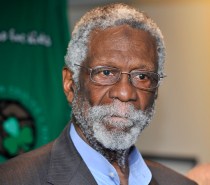
After studying these 16 captains (Bill Russell was one of them, hence the pictures above), he discovered that there were seven important traits that they shared in common:

  1. Extreme doggedness and focus in competition.
  2. Aggressive play that tests the limits of the rules.
  3. A willingness to do thankless jobs in the shadows.
  4. A low-key, practical, and democratic communication style.
  5. Motivates others with passionate nonverbal displays.
  6. Strong convictions and the courage to stand apart.
  7. Ironclad emotional support.

In the remainder of the book, the author is going to explore these different traits.  As I have been reviewing this list, I’ve been thinking a lot about how these traits might also be present in the leaders of the best businesses, churches and families.  I really want to explore that idea more and how those of us who want to lead our families, churches and organizations with a high level of excellence and success might be able to work on growing in these traits.  Interesting…

GTD

GTD Quick Reference Card

I just finished reading David Allen’s Getting Things Done: The Art of Stress Free Productivity book for the second time.  I read it about 9 years ago and I went about half way towards adopting the organization system that he suggests and it made a big positive impact in my productivity at work.  After reading the updated edition of this amazing book, I did the work last week at my job to completely adopt the system that he suggests.  I’m very excited about it.

You can learn something about his recommended system from the diagram above.  The idea he has is that we need to have captured all of our projects, next actions, waiting for items, etc. in a system that we trust, constantly update and review once a week.  You refuse to allow your work to be constantly driven by what most recently hits your e-mail inbox.  It allows for much greater intentionality and focus.  When you do take the time to do the intake of your physical or e-mail inbox, you do the hard thinking up front about what the very specific next action is related to each item (assuming you cannot toss it, file it or complete it in two minutes).

The challenge with this system will be for me to stay on it.  But, I’m determined.

The Captain Class

The Captain Class

Yesterday, I went on a coffee date with my oldest son and looking at books at our local bookstore.  He had given me a coupon for Father’s Day to get a book.  This is the book I purchased.  The idea is that I am going to read it and share good passages with him.

The author, Sam Walker, did an eleven year extensive study of the most successful sports teams of all time with the intention to find common traits which made them great.  He found that they only had ONE thing that they all had in common.  The most crucial ingredient in a team that achieves and sustains historic greatness is the character of the player who leads it!  I’m so intrigued by this thesis and I’m looking forward to reading the book.


The Mystery of Marriage

Quote of the Day from one of my favorite books of all time, The Mystery of Marriage by Mike Mason:

“Some people go into marriage thinking that they will not have to change much, or perhaps only a little bit along lines that are perfectly foreseeable and within their control.  Such people are in for a rough ride.” “Marriage, even under the very best of circumstances, is a crisis…”  “We are not simply moving in with someone who we might think it would be fun to live with.  Rather, we are giving our prior assent to a whole chain reaction of trials, decisions, transformations, and personal cataclysms which, once they are done with us, may leave us not only changed almost beyond recognition, but marked nearly as deeply as by a religious conversion.  And this is just as it ought to be.”


Discernment

pursuing-gods-will-together-presentation-1-638

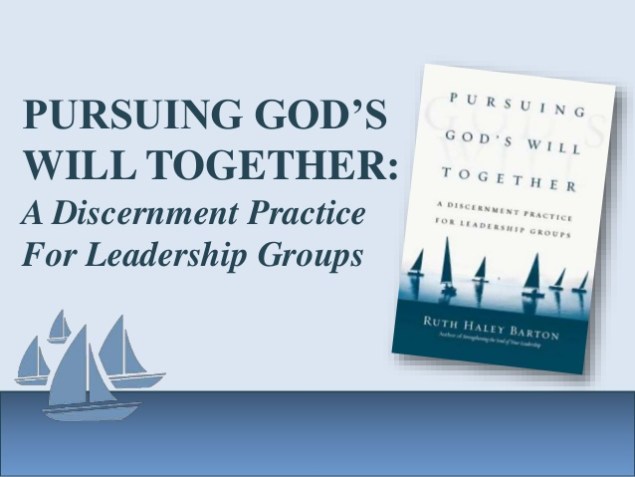
I just finished this book yesterday.  It was good.  I was reading it for the purpose of trying to learn more about how to go through a process of spiritual discernment and decision making in a group context – thinking about application to our group of elders in our local church body.

The main point of the first part of the book was that individuals in a group need to be growing in spiritual transformation personally as a first step and practicing discernment in their own lives.  The importance of the practice of spiritual disciplines was emphasized.

In terms of leadership groups in churches or non-profit organizations, it is important to clarify the most important values of the community/group.  Here are some other key points:

  • Our commitment to love must be primary
  • Discernment is not about what we think or prefer or are comfortable with.  Rather, it is about seeking the mind of Christ.
  • We should seek “indifference” in the matters that come up for decision: meaning that we should seek to not be too tied to any one outcome but wanting God’s will most of all and being open to the possibility that might not line up with our desire(s)/control/approval
  • Spiritual leadership is not about our leadership but about seeking the mind of Christ
  • Listen to others (and to God)
  • Do not interrupt (and do not formulate what you will say next while someone else is speaking)
  • If someone hasn’t spoken, consider asking that person what he/she thinks
  • Leave space for anyone who may want to speak a first time before speaking a second time yourself
  • Hold your desires/opinions lightly and be willing to be influenced by others
  • Allow for quiet times of silence after people have spoken in order to process/evaluate the ideas discussed

There are many more particulars discussed in the book about going through a process of gathering information, listening to each other, listening/praying to God and making the decisions.

I enjoyed the book.  It is the type of book that was written with a very specific purpose.  It seems like a good book for a leadership team at a church or Christian non-profit organization to read through and discuss.  The whole discernment process can be adopted or just some elements could be adopted which fit a particular group.

I’m off to help my youngest son with his project on making a model of an element from the periodic table (nitrogen in his case).

A Secular Age – What a book!

AWARDS

  • New York Times Notable Book of 2008
  • Times Literary Supplement Book of the Year, 2008
  • 2008 Christianity Today Book Award, History/Biography Category
  • 2008 Henry Paolucci/Walter Bagehot Book Award, Intercollegiate Studies Institute
  • Globe & Mail Best Book of the Year
  • Publishers Weekly Best Book of 2007
  • Tablet Best Book of the Year
  • Charles Taylor is Winner of the 2008 Kyoto Prize in Arts and Philosophy
  • Charles Taylor is Winner of the 2007 Templeton Prize

My friend, Erik, just mentioned to me yesterday that he was planning to read this book.  I have encouraged a few of the smartest people I know to read it, but only my friend Nathaniel has actually accomplished the feat.  I am wishing Erik the best of luck and his comment spurred me to think anew about the book.  And, I am now thinking of reading it again.  If Erik reads it, I would enjoy discussing it with him.

I read this book almost two years ago.  When I finished the 22 page Introduction, it was so good that I started again at the beginning and read it once more.  Upon finishing the 776 pages (not including footnotes), I felt like I had climbed Everest.  I found so many new vocabulary words in the course of my reading, that I purchased a vocabulary software program to keep track of all the new words I was learning (arrogate, cavil, enervation, imbrication, stultification, to name a few).  Each time I read it, I needed to make sure that I had at least 30 minutes of concentrated reading time so that I could get in the flow and follow the ideas.

Even though I love reading books, I rarely would think of referring to a book as beautiful.  But, that is the thought I continued to have as I read A Secular Age.  When I finished, I also kept thinking that I had to read this important book again.  Taylor takes up the question of how we arrived at this secular age that we now live in.  I found his explanations very persuasive and expansive.

Should I read it again?  I was thinking of tackling Alvin Plantigna’s Warranted Christian Belief first, which is another very big reading project.  I know if I read it again, it will take incredible dedication, discipline, concentration and perseverance.

Some gems from the Introduction:

“We have changed not just from a condition where most people lived ‘naively’ in a construal (part Christian, part related to ‘spirits’ of pagan origin) as simple reality, to one in which one almost no one is capable of this, but all see their option as one among many.” (p. 12)

“I would like to claim that the coming of modern secularity in my sense has been coterminus with the rise of a society in which for the first time in history a purely self-sufficient humanism came to be a widely available option.  I mean by this a humanism accepting no final goals beyond human flourishing, nor any allegiance to anything else beyond this flourishing.  Of no previous society was this true.” (p.18)

Lastly, here are a few choice comments about the book by some reviewers:

This is Charles Taylor’s breakthrough book, a book of really major importance, because he succeeds in recasting the whole debate about secularism. This is one of the most important books written in my lifetime. I am tempted to say the most important book, but that may just express the spell the book has cast over me at the moment.—Robert N. Bellah

Taylor’s masterful integration of history, sociology, philosophy, and theology demands much of the reader. In return you will be convinced that Charles Taylor is one of the smartest and deepest social thinkers of our time.—Tyler Cowen, Slate

[A] big, powerful book… [Taylor’s] book is massive in its historical and philosophical scope. Penetrating and dense, it would take months to fully digest. Loosely structured, it’s crammed with original insights. Taylor, 75, can pack more into one of his complex paragraphs than most prevaricating, deconstructing academic philosophers can say in a chapter, or even a book… The book explores the immense ramifications of how the West shifted in a few centuries from being a society in which ‘it was virtually impossible not to believe in God’ to one in which belief is optional, often frowned upon.—Douglas Todd, The Vancouver Sun

As an aside, I had two major interruptions in writing this blog – about 20 minutes of rebounding for my oldest son and then after another 20 minutes of rebounding for my middle son.  Pure joy for me.  I love being with them and I use the time we are on the court together to pray for their lives (and get some exercise!).  All the time I have with each one of them is such a gift from God.  They have two big basketball games on Friday and Saturday which we are really looking forward to.

Conclusion

Are We Done Yet

Here are some quotes from the Conclusion of the book I recently finished, Biblical Authority After Babel: Retrieving the Solas in the Spirit of Mere Protestant Christianity.  I’m finding the best way to write about this particular book is to share some of the quotes that I have enjoyed:

  • “Protestant evangelicalism is not simply another name for ‘lowest common denominator’ Christianity.  The mere Protestant Christianity that I have advocated in these pages is neither ‘generic Protestantism’ nor ‘diluted catholicism’.” “Could it be that the various Protestant traditions function similarly as witnesses who testify to the same Jesus from different situations and perspectives?” (p. 223)
  • “Rather, it takes the discussion (conference) between the many Protestant churches to appreciate fully the richness of the one gospel.  The particularity of each Protestant tradition is thus not a source of conflict but a servant of unity – the unity of the truth of the gospel.”  “…evangelicalism offers a trans-denominational denominator that makes Protestantism not a pervasive interpretive pluralism but a unitive interpretive plurality – a mere Protestant Christianity.” (p. 224)
  • “The fruit of the Protestant Reformation is ultimately not anarchy (pervasive interpretive pluralism) but abundance (unitive interpretive plurality).” (p. 226)


Soli Deo Gloria

Soli Deo Gloria

I am finishing Kevin J. Van Hoozer’s book, Biblical Authority After Babel for the second time.  I was “cramming” in preparation for the meeting of our book discussion group this last Tuesday night.  As I mentioned before, it is not an easy read.  I felt like I needed to read it again in order to better retain and understand the ideas written about in the book.

In this chapter, I learned about Martin Bucer (1491-1551), a professor of theology at Cambridge University, who tried to find doctrinal unity between Catholics and Protestants and between various factions of Protestants.  He seems like a very interesting guy and I added a biography about him to my list of books to read.

My favorite quotes from the fifth chapter, which is titled, “For the Glory of God Alone“:

  • “To the extent that the ecumenical movement single-mindedly pursues unity as if it were always a good, and assumes that unity is a human creation, we must be wary.”  “Mere Protestant Christianity is not an ecumenism after the flesh.” (p.187)
  • “Sects typically refuse to recognize the legitimacy of other gatherings of two or three in Christ’s name, which effectively means denying Christ’s presence among those gatherings.”  “Mere Protestant Christianity is not sectarian.” (p.188)
  • “The term ‘catholicity’ may be a better term to use than “unity” for expressing the church’s oneness because it does not deny difference. There is a commitment by the church to be ready to challenge but also be challenged by other Christian traditions.”  “Catholicity becomes not merely a description of the church but an ecclesial virtue: a willingness to engage other church traditions.” (p. 195)
  • “The best Protestants are catholic Protestants – people centered on the gospel but also alert to how the gospel has been faithfully received across cultures and centuries.” (p. 199)
  • Level-one doctrines are catholic doctrines – what every follower of Jesus, anywhere and at all times, must believe to preserve both the intelligibility of the gospel and the fellowship of the saints.  Disagreements about level-two doctrines do not disqualify a person from the fellowship of the saints, but they may lead to a parting of the ways.” “Finally, level-three doctrines, though important, are not regarded as necessary for everyone to affirm even in the same confessional tradition or denomination.  There are areas on which there can be a legitimate diversity of opinions, even in a local church.” (pp. 205-206)
  • “Understanding of God’s word grows, not when people simply repeat what it says, but rather when they enter into a conversation about it with others, past and present.” (p. 207)
  • “Dialoguing can even be a means of sanctification and transformation to the extent that it affords individuals and churches the opportunity to grow in the conversational and interpretive virtues.” (p. 208)
  • “The church glorifies God when local churches share their biblical interpretations and doctrinal reflections with one another, especially when this is done in the overarching context of table fellowship.” (p. 212)

I finished the book, and we had a good discussion about it.  One of the biggest takeaways was to value the diversity among Christians and churches and to be mindful how that can be part of reflecting more of God’s fullness.  I’ll probably do one more post about the Conclusion (and then on to another book!).

Solus Christus and 13th birthday

Solus Christus

In the fourth chapter of Biblical Authority After Babel by Kevin J. Vanhoozer, the author explores how solus Christus affirms Jesus Christ as the only mediator between God and men but not, “Christ alone, independent of the church.”  It actually implies the “royal priesthood” of all believers.  The author focuses primarily on how solus Christus leads to the relevance of His body, the church.

Some of my favorite quotes from this chapter:

  • “Christ is no tame lion: he cannot be domiciled in and domesticated by any single church or denomination.” (p. 152)
  • “The Reformers never meant the distinction between the invisible and visible church to render the latter unimportant.” (p. 156)
  • “Luther never spoke of the priesthood of the believer, in the singular, and neither does the New Testament.  The Reformers emphasized the priesthood of all believers not as isolated but as gathered individuals, baptized members of a local body anointed with the Holy Spirit.  The phrase is not a charter for rank individualism.”  “It does not imply individuality.  It necessitates community.” (p. 158)
  • “Far from being a charter for every individual to read in a way that is right in his or her own eyes, the royal priesthood is an ordered and disciplined community that exists largely to interpret Scripture, binding and loosing certain doctrines and those who hold them in order to preserve its integrity as a local embassy of the kingdom of God.” (p.174)
  • “…biblical interpretation is a communal exercise.” (p. 175)
  • “Mere Protestant local churches have an obligation to read in communion with other local churches.” (p. 176)


Tonight I celebrated the 13th birthday of our good friend.  Ten men, including this young man’s dad, gathered together to have dinner and play some games.  Most importantly, we each shared some affirming/encouraging/challenging words specific to this young man.   I’m so thankful for these good friends and for our community life together in which we love and support one another and one another’s kids.  In our culture, we lack rituals and traditions to call young boys into manhood (and young women into being women).  However, in our local community of Christ followers, we are trying (imperfectly, of course) to show and tell young men and young girls what it means to become mature adults who love God, are responsible, and humbly serve others in our community.


New words

I like reading books that use words that I do not know the meaning of.  That might seem strange, but it encourages intellectual humility.  I made a long list of vocabulary words and dutifully looked them up when I read Dostoevsky’s Crime and Punishment many years ago.  I had the same experience when I read A Secular Age by Charles Taylor (an amazing book, by the way, which made me feel like I had climbed a high mountain when I finished it).  I would estimate that I found at least 75-100 new words or words I had seen but could not remember what they mean in each of those two books.

Anyway, I just finished the chapter titled, “So To Speak”, from Joseph Epstein’s book Narcissus Leaves the PoolNarcissus Leaves the Pool and I found three fun words which I will probably never have the skill to use myself:

  1. Malapropism: an act or habit of misusing words ridiculously, especially by the confusion of words that are similar in sound
  2. Polyglot: able to speak or write several languages; multilingual
  3. Simper: to smile in a silly, self-conscious, often coy manner

As I am writing this blog post, I can hear my wife reading a book to my 12 year old son and that sounds like music to my ears.