Long Days and Good Reading

During this Pandemic the days of the weekend can sure seem long.  I always wake up early and have a number of hours until the rest of my family wakes up.  We have so much less planned than we used to so it is also easier to make more time to read.  I’ve been up for about two and half hours and here’s how I have passed my time so far:

I read a chapter for the New Testament book of the Bible, Colossians along with a chapter in a book I am reading called Colossians Remixed.  Then I read The Economist magazine to get updated on news – I’ve found this weekly magazine to be the best source of global news.  I read a chapter in The Color of Compromise: The Truth About the American Church’s Complicity in Racism since our book group from church is meeting again this week to discuss the book.  I read some of The Conservative Sensibility by George Will.  Lastly, I played a little of my vocabulary building app that I now love: Vocab.com.

A little sampling from each of these:

Colossians
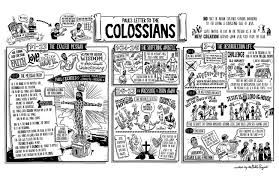
Colossians The Bible Project

I’ve been re-reading the book of Colossians from the Bible each day lately (it is has four chapters).  Today, I read chapter 3 and here are some of the verses I enjoyed:

  • 3:9-11 – “Do not lie to one another, seeing that you have put off the old self with its practices and have put on the new self, which is being renewed in knowledge after the image of its creator.  Here there is not Greek and Jew, circumcised and uncircumcised, barbarian, Scythian, slave, free: but Christ is all, and in all.”
  • 3:14-15 – “And above all these put on love, which binds everything together in perfect harmony.  And let the peace of Christ rule in your hearts, to which indeed you were called in one body.  And be thankful.”
  • 3:23-24 – “Whatever you do, work heartily, as for the Lord and not for men, knowing that from the Lord you will receive the inheritance as your reward.  You are serving the Lord Christ.”

You can get a cool overview of the book of Colossians by watching this link from the Bible Project:  Colossians: The Bible Project

Colossians Remixed

Colossians Remixed

When I read different books of the Bible, I find it helpful and enjoyable to also read a commentary or a book about that book of the Bible.  This particular book attempts to help the modern day reader of Colossians understand the cultural and social context of the original biblical letter from the apostle Paul to the Colossians.  It also looks carefully at some interesting parallels in our modern world with the ubiquity of empire and globalization.  Today, I read chapter 3, “Placing Colossians: Discerning Empire.”  Some excerpts:

  • “Such myths, of course, drive contemporary globalization as well.  Most powerful is the progress myth, which has been the driving force behind Western capitalism since the Enlightenment.  The myth that we are moving as a culture toward increasing wealth and technological control, and that this is invariably good, provides the justification for all the economic and military policies of the North.” (p. 62)
  • “If the Pax Romana summarized the Roman imperial mythology, then the Pax Americana, with its clear distinction between good and evil and its self-righteous and aggressive foreign policy, encapsulates the dominant mythology of our day.” (p.62)
  • “Just as in the ancient world the images of peace and prosperity masked the reality of inequality and violence, so the contemporary images projected by advertising mask the reality of sweatshops, inequality, and domestic and international violence created by our lifestyles.” (p.63)

The Color of Compromise

Tisby The Color of Compromise

We have a number of small groups in our church reading this book together.  It’s been an educational book for me, but also disturbing.  I was particularly disgusted this morning as I read chapter 4, “Institutionalizing Race in the Antebellum Era”.  I am disheartened that Christians in previous generations not only failed to stand up to slavery and the dehumanization of blacks, but also were active in perpetuation of slavery and discrimination.  Here are a few excerpts:

  • “Despite the racism black Christians experienced, they did not abandon the faith.  In fact, the decades before the Civil War served as an incubator for newborn black American Christianity.  Black Christians began developing distinctive practices that would come to characterize the historic black church tradition.  Black Christianity in the United States grew alongside the explosive expansion of slavery and hardening of racial boundaries.  The faith of black Christians helped them endure and even inspired some believers to resist oppression.” (p.57)
  • “…of the more than 600,000 interstate sales that occurred in the decades prior to the Civil War, 25 percent destroyed a first marriage, and 50 percent broke up a nuclear family.” (p.60)
  • “If there is one concept that helps unlock the twisted logic of American slavery better than almost any other, it is the chattel principle.  The chattel principle is the social alchemy that transformed a human being made in the image of God into a piece of property.” (p.60)
  • “Indeed paternalistic attitudes toward black people defined much of American Christianity.  White evangelists compromised the Bible’s message of liberation to make Christianity compatible with slavery.” (p.66)
  • “A majority of white Christians refused to take a definitive stance against race-based chattel slavery, and this complicity plagued the church and created stark contradictions.” (p.68)

The Economist – Separate, Downtrodden: Race in the City

This last week’s The Economist had a special section on the Midwest.  One of the articles was about the particular problems in the Midwest with segregation and policing.  One quote from the article:

  • “The biggest concerns are inequality and segregation.  Carmelo Barbaro, at the University of Chicago, says too many people are born in neighborhoods that limit their prospects.  Historical problems are known: black students kept out of white schools; black people denied mortgages; violent attacks by white residents who corralled African-Americans into a few areas of cities.  Formally such restrictions no longer exist.  De facto many do.” (p.7 of Special Report in the magazine)

The Conservative Sensibility
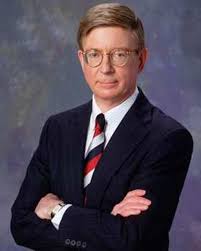
George Will

I do not know why I like to pick such long books to read, but I am more than halfway through George Will’s 500+ page tome.  Mr. Will is not a Trump supporter and is not necessarily directly advocating for the current day Republican Party.  Instead, he focuses on the historical and philosophical roots and consequences of conservatism and progressivism.  I do not always agree with him, but it has been a good and thought provoking book.  Here is a sampling of what I read this morning:

  • “Paul Barton of the Educational Testing Service estimated that about 90 percent of the difference among schools in average proficiency can by explained by five factors: number of days absent from school, number of hours spent watching television, number of pages read for homework, quantity and quality of reading material in the home, and the presence of two parents in the home.  The fifth factor is supremely important, not least because it is apt decisively to influence the other four.” (p.316)
  • “By age three, children from poor homes have heard, on average, 30 million fewer words spoken at home than children in professional-class homes.  It is not altogether clear why more affluent and educated parents talk to their children more, although fatigue might be a factor in the relative silence of poor homes.” (p.317)
  • “Hence the vast-and increasingly misplaced-faith in schools as the great equalizers of opportunity for upward mobility in a meritocratic society.  Studies of early childhood development indicate that school comes too late for many children.  Before they cross their first schoolyard, severe damage has been done to their life chances.  Even superb schools often cannot correct the consequences of early deprivation, and superb schools are not frequently found in the neighborhoods where children who are damaged by their social environment receive those damages.” (p.321)
  • “Without the nurturing and disciplining done in intact families, individuals are apt to be ill-equipped to exercise the freedom to become unequal, and therefore are handicapped in the pursuit of justice for themselves and others.” (p.322)

Vocab.com app

I only played for a little while on my vocabulary app today.  A few Saturdays ago, I went a bit crazy and achieved 5th place in the world for my score (I probably played for about 3 1/2 hours that morning).  I don’t mind if you call me a nerd.  Here’s the screenshot:

Vocab.com #5

Here are a few sample words from today:

  • Overwrought: deeply agitated, especially from emotion
  • Malignance: the quality of being disposed to evil
  • Badger: annoy persistently
  • Lustrous: reflecting


“Radical” Hospitality

I just finished Rosaria Butterfield’s book, The Gospel Comes with a House Key: Practicing Radically Ordinary Hospitality in our Post-Christian World.  I found the book to be extremely challenging in terms of a call to living an open and hospitable life.  Her stories of hospitality with her neighbors and unlikely friends moved me to want to be more like her.  I’m going to ask my wife to read the book to see how we can grow in this together as we lead our family.  She focused a lot of her stories of hospitality in their family’s home, which was great.  However, I think that we can also be hospitable to people wherever we encounter them as we open our lives to others everywhere.

hospitality

Here’s a few quotes from the book (but the stories are really the best):

  • “We must work hard to know who our neighbors are and how they struggle.  We want to show respect and a helping hand.” (p.32)
  • “Practicing hospitality in our post-Christian world means that you develop thick skin.” (p.62)
  • “Practicing daily, ordinary, Christian hospitality doubles our grocery budget – and sometimes triples it.  There are vacations we do not take, house projects that never get started, entertainment habits that never get an open door, new cars and gadgets that we don’t even bother coveting.” (p. 63)
  • “Jesus dines with sinners so that he can get close enough to touch us, so that he can participate in the intimacy of table fellowship as a healer and a helper.  Jesus comes to change us, to transform us, so that after we have dined with Jesus, we want Jesus more than the sin that beckons our fidelity.” (p.85)
  • “Christian hospitality is not for sale.  It cannot be made into a commodity.  The gospel is free.” (p. 86)
  • “But the question is: Do Christian people practice Christian hospitality in regular, ordinary, consistent ways?  Or do we think our homes too precious for criminals and outcasts?  Our homes are not our castles.  Indeed, they are not even ours.  So where can you start?  Start where you are.” (p. 100)
  • “We live in a world that highly values functionality.  But there is such a thing as being too functional.  When we are too functional, we forget that the Christian life is a calling, not a performance.” (p.111)
  • “The Christian life isn’t a math test.  A whole lot more than the answer matters a whole lot more.  So he accompanies them in their suffering.  And we need to do the same.  When people are willing to stop and tell us where they hurt, we need to praise God for it, and we need to stop what we are doing, shut our mouths, and listen with care.” (p. 200)
  • “Imagine a world where neighbors said that Christians throw the best parties in town and are the go-to people for big problems and issues, without being invited.  Imagine if the children in the neighborhood knew that the Christians were safe people to ask for help when unthinkable agony canvassed their private or family lives.  Imagine a world where every Christian knew by name people sufficiently to be of earthly and spiritual good.  Imagine a world where every Christian knew by name people who lived in poverty or prison, felt tied to them and to their futures, and lived differently because of it.  This is the world that the Bible imagines for us.  That is the world that Jesus prays for us to create in his name.”


P.S. Vocab word of the day is: elide – omit or strike out.

Job and demotic

Word of the day from the vocabulary app I have been enjoying is demotic: of or for the common people.  A demotic saying or expression is casual, colloquial, and used by the masses.  It comes from the Greek word demotikos.

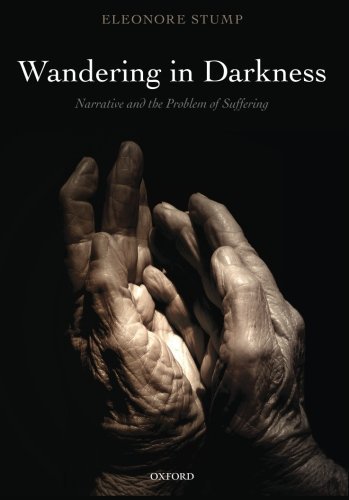
I’ve always enjoyed reading the story of Job from the Bible.  As I mentioned in an earlier post, I started reading Wandering in the Darkness: Narrative and the Problem of Suffering by Eleonore Stump.  It is a deeply profound book, but also quite long (about 500 pages).  Her chapter on the biblical character of Job is brilliant.

41o2FF+cQpL

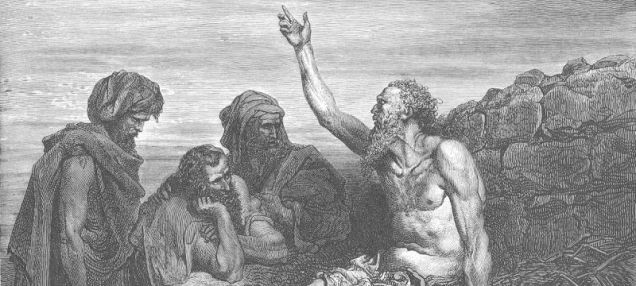
For the purposes of this post, I will assume you have some basic knowledge about the story of Job.  A common reading of the book of Job supposes that the book will give us help with the problem of suffering.  Part of this common reading is to understand that God allows an innocent person to suffer terribly.  In the midst of that suffering, Job acknowledges God’s power but complains about God’s apparent lack of goodness.  When God shows up, he only talks about his power and fails to address Job’s charge.

I am going to share some interesting insights/observations from Stump in her chapter about Job:

  • In the story we see God as a person, in personal and parental relationships with the people he created, sharing what he has created with them and making them glad by doing so.
  • In God’s speech to Job, he talks to the sea as if it were an exuberant child of his.  God brings the sea into conformity to his will by talking to the sea and explaining what it can and cannot do.  God speaks the same way about other created inanimate things.
  • God’s speech to Job makes clear his great care for the animals and his connection to them.  The animals are portrayed as responding to God’s attention by interacting with him.
  • In the divine speeches, there is a suggestion that God operates on the principle that applies to good parents – that, other things being equal, the outweighing benefit that justifies a parent in allowing some suffering to an innocent child of hers has to benefit the child primarily.  The suffering of an innocent will only be because an outweighing good can be produced for that person that is otherwise unavailable to him.
  • Job’s personal complaint includes a charge of betrayal of trust.  A face-to-face encounter can make all the difference – the sight of God’s face is an explanation of Job’s suffering.  Stump promises to take up this topic later in the book.
  • The divine speeches challenge Job and yet God rebukes Job’s friends and defends Job and his questioning of God.  How can this incongruity be resolved?  Maybe something about Job’s giving voice to the accusations is good even if the accusations of God are not true.
  • God is conveying to Job God’s love for him.  Job’s face-to-face experience with God goes “past” goodness to love.
  • “So, until prosperity and goodness are pulled apart, it may not be a determinate matter whether Job loves the good for its own sake, or whether what he loves is mingled good and wealth.” (p.207)
  • After Job’s suffering, he takes his stand with God.  His love of God is only for God’s sake, not for the sake of wealth or other desirable effects.  Job becomes the sort of person whose story a culture strives to hand on, to help shape the ideals of the next generation.  Under extremely difficult circumstances, Job maintained uncorrupted moral uprightness and personal commitment to God and he became a much better person.

These few insights from this chapter on the study of the Biblical character of Job, do not do Stump’s chapter on him justice.  If you haven’t read the book of Job from the Bible, I encourage you to check it out.

job (1)


Vocab is Fun!!

Vocab is Fun!  And, Here’s Proof.

I think expanding my vocabulary is fun.  It’s very cool when I encounter (and understand) a word I have recently learned.  As I mentioned in a previous post, I have been spending some time each day using the Vocab.com app.  I have been telling others about this cool app, but so far I only have one confirmed “convert” who is also enjoying it.

Here’s a sampling of some words I have been learning today:

  • Malapropos – I understand the word, “apropos” but I had never encountered this word. It helps to know another language (Spanish, in my case) because mal means “bad” in Spanish so I was able to guess that this word means inappropriate.  The definition specifically says that this adjective is used to describe something that is awkwardly unsuitable for the situation or setting at hand.
  • Untoward – Actually, this word also describes something inappropriate (or offensive).
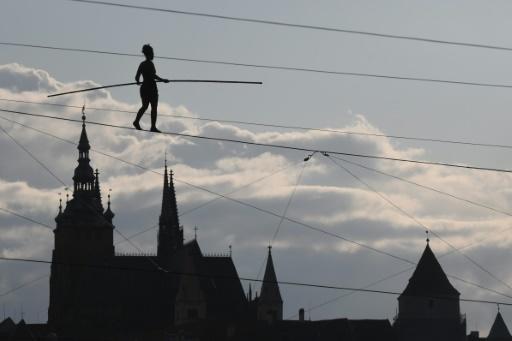
  • Funambulist – Someone who walks on a tightrope.

funambulist

  • Physiognomy – The appearance of someone’s face.
  • Vertiginous – To be dizzy and woozy (a disorienting feeling).  This is what I would experience if I was a funambulist!
  • Numismatist – a coin collector

Coins

  • Preen – primp and pay careful attention to how you dress or puff yourself up or self-congratulate yourself
  • Codswallop – nonsense or silliness, ridiculous
  • Pellucid – easy to understand, clear/transparent
  • Palliate – make something less bad/relieve symptoms or consequences of something

Warning: if you try to incorporate too many new words into your vocabulary, you will probably irritate one or more of the members of your family!

Madeline and Prestidigitation

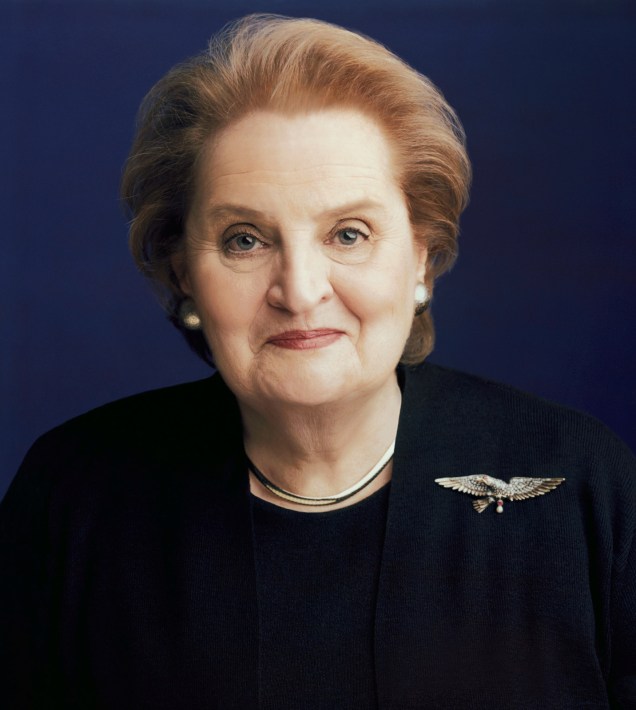
I just finished Madeline Albright’s book, Hell and Other Destinations: A 21st Century Memoir.  I enjoyed the book and she is such an impressive person.

In the last two chapters of her book, she discusses President Trump and our current political environment.  She says that no other president has so “thoroughly combined a boorish personality with an incapacity to accept criticism, an utter disregard for the responsibilities of his office, and a tendency to make stuff up worth of both Guinness’s book and Ripley’s.”  What a roast!  I cannot say I disagree.

She discusses Trump’s instinct to go on the offensive while at the same time claiming to be under attack.  She thinks that the philosopher Eric Hoffer’s insight from sixty years ago applies to Trump.  He wrote, “rudeness is the weak man’s imitation of strength.”  She is worried that there is danger of him causing grave damage to the foundations of our democracy.

In terms of foreign policy, Trump has a obvious yearning to be praised as a world leader, yet as a result of his arrogance he is a source of dismay to U.S. allies and widely mocked.  Trump thinks of foreign policy less in strategic terms and more about style.  Mere unpredictability is just a character trait but not a policy.  Typically, the center of a nation’s foreign policy is embodied by a set of clear goals.  But, besides a desire to sell weapons and reduce trade deficits, it is unclear what the Trump administration wants to achieve or what it stands for.  Trump seems to identify, bond (and even envy) most with despots with bad records on human rights.  The president also likes to ignore or criticize the global system of international problem solving and law.  He ignores allies and thinks acting unilaterally is the best road to success.

In order to effectively manage world affairs, preparation and organization are required (and these are sorely lacking in Trump’s administration).  Now policies are often decided by presidential whim and influenced by what Trump saw on television instead of by careful analysis.  Trump has an attitude against career military and civilian professionals.  He has a deep need to blame others as well.  All this has weakened our country in the face of enemies and undermines the trust of U.S. citizens in their own institutions.  This amounts to what Albright calls, “a textbook example of how not to lead.”

On a lighter note, vocabulary word of the day is prestidigitation.  This means magic tricks performed as entertainment.

I am about halfway through the book, 1984 and Philosophy: Is Resistance Futile?.  In it, professional philosophers write articles to analyze different elements of the book.  It’s a good, but somewhat depressing read.

Hell and Other Destinations

I recently started reading Madeline Albright’s memoir, Hell and Other Destinations, about her experiences since stepping down as the Secretary of State.  She is an amazing woman and it is fascinating to read about her life.  Here’s a sample paragraph from a chapter I just finished,

“The problem, of course, is that we are all so busy using time-saving devices that we don’t have time for anything else.  We may understand what it means to answer the call of conscience, but instead of acting on that understanding, we tend to wait – until we are out of school, until we can afford a down payment on a house, until we can pay for our children’s education, until we can free up time in retirement, until we can take that vacation we have always dreamed about.  We keep waiting until we run out of ‘untils.’  Then it is too late.”

I would highly recommend this book.

Madeleine-K-Albright


Here is a fun vocabulary word that I learned today on my vocab.com app that made me think of my wife: pulchritudinous (person of breathtaking beauty).


Will it Stick?, the book of Job and word of the day

I continue to enjoy reading through the book, Make it Stick: The Science of Successful Learning by Peter C. Brown, Henry l. Roediger III and Mark A. McDaniel.  Here are some quotes from chapters 5 and 6:

  • “Good judgment is a skill one must acquire, becoming an astute observer of one’s own thinking and performance.  We start at a disadvantage for several reasons.  One is that when we’re incompetent, we tend to overestimate our competence and see little reason to change.” (p.104)
  • “Our understanding of the world is shaped by a hunger for narrative that rises out of our discomfort with ambiguity and arbitrary events.  When surprising things happen, we search for an explanation.” (p.109)
  • “even your most cherished memories may not represent events in the exact way they occurred.  Memory can be distorted in many ways.  People interpret a story in light of their world knowledge, imposing order where none had been present so as to make a more logical story.” (p.112)
  • “Fluency illusions result from our tendency to mistake fluency with a text or mastery of its content.” (p. 116)
  • “Our memories are also subject to social influence and tend to align with the memories of the people around us.” (p.116)
  • “Humans are predisposed to assume that others share their beliefs, a process called the false consensus effect.” (p. 117)
  • “Confidence in a memory is not a reliable indication of its accuracy.” (p.117)
  • “The person who knows best what a student is struggling with in assimilating new concepts is not the professor, it’s another student.” (p. 120)
  • “…incompetent people overestimate their own competence and, failing to sense a mismatch between their performance and what is desirable, see no need to try to improve.” (p. 121)
  • “Most important is to make frequent using of testing and retrieval practice to verify what you really do know versus what you think you know.”  Space your testing, vary your practice, keep the long view.” (p. 125)
  • “Instructors should give corrective feedback and learners should seek it.” (p. 126)
  • “What you tell yourself about your ability plays a part in shaping the ways you learn and perform – how hard you apply yourself, for example, or your tolerance for risk-taking and your willingness to persevere in the face of difficulty.” (p.140)

Some takeaways from chapter 6:

  1. Be the one in charge (of your own learning).
  2. Embrace the notion of successful intelligence: don’t roost in a pigeonhole of your preferred learning style but take command of your resources and tap all of your “intelligences” to master the knowledge or skill you want to possess.
  3. Adopt active learning strategies, like retrieval practice, spacing, and interleaving.
  4. Distill the underlying principles: break your idea or desired competency down into its component parts.


I am reading a great book by philosopher, Eleonore Stump, called, Wandering in Darkness: Narrative and the Problem of Suffering.  The current chapter I am reading explores the story of the book of Job in the Bible.  It’s hard to distill what Ms. Stump is trying to bring out of the story of Job, but I will try to do that later once I finish the chapter.  The book of Job is so interesting.

Job

(Good intro to the book of Job: The Bible Project: Book of Job)  

Word of the day.  As I mentioned in my last post, I am loving the new vocab app that I found and work on it each day.  It has a perfect balance of testing and bringing back words enough so that you learn them.  Favorite word from today’s lesson is mendicant: given to begging (adj.); a beggar (n.).

Begging

Birthday, Vocab app and Make it Stick

I turned 50 in January and we had a big party at our house with over 50 friends.  We had a great time.  One of my goals for 2020 was to read more books with friends so I laid out piles of books I wanted to read in 2020 by our bookshelves and asked any friends who were interested to put their name on one of the sign up sheets I made next to a book they would be willing to read with me.  Twelve of my friends signed up and so I bought each of them whatever book they signed up for, and I have been reading the books along with them and meeting to discuss the books and texting about the ideas in the books as well.  I’ve really enjoyed this.  There are so many books that I have read in the past that I wanted to talk to someone about.  This also pushes me to review what I am reading in preparation for discussion so I learn the material better.

For anyone who enjoys growing their vocabulary, I recently found an app called, “Vocab.com”.  It’s the best vocabulary building tool I have ever seen.  It’s fun to do and I now spend at least 5 minutes per day with it.  Give it a try!

learning

Make it Stick: The Science of Successful Learning

My friend from work gave me this book for Christmas, and I asked a group of co-workers to read it with me.  It’s very good so far and here are some of the things I have learned about learning from the first four chapters:

  • Learning is most durable and deep when it’s effortful.
  • Massed practice of a skill and rereading text are among the least productive study strategies, even though they are among the most common.
  • Retrieval is more difficult when you space out practice at a task, but this is conducive to longer lasting learning and varied application of it in future settings – the gains from this are slower and require more effort, but it results in long term gains.
  • The more you can explain about how what you are learning relates to your prior knowledge, the better your grasp of the learning will be.
  • Learning is stronger when it is made concrete and matters to you personally.
  • Repetition alone does not lead to good long-term memory.
  • Mastering a text or lecture is NOT the same as mastering the underlying ideas.
  • Testing is important for long term retention and self-testing can be very effective along with the testing from an instructor.
  • The more cognitive work is required for retrieval, the greater will be your retention of the subject/skill/ideas.
  • Repeated practice of the same thing only leads to short term memory – practice is much more effective if it is spaced out, mixed with other learning.
  • There’s hardly any limit to our learning if we can relate it to what we already know.
  • Unsuccessful attempts to solve a problem facilitates deep processing of the answer when it is supplied and leads to longer term retention.  Teachers should allow students to struggle with solving problems.  When errors are committed and there is corrective feedback, students learn better.  Plus, those who are taught that learning is a struggle will be more willing and able to take on tough challenges in the future.
  • Thinking that intellectual ability is fixed from birth is a fallacy and those who believe it tend to avoid challenges.  Those who believe that their intellectual abilities lie largely within their control, will take on difficult challenges.  Failure will be viewed as a sign of effort and progress in learning.


rodin-the-thinker-loh_4_orig

I end with a quote from the great Dr. Seuss, “The more that you read, the more things that you will know.  The more that you learn, the more places that you will go.”


Pharisees

Image result for pharisee picture

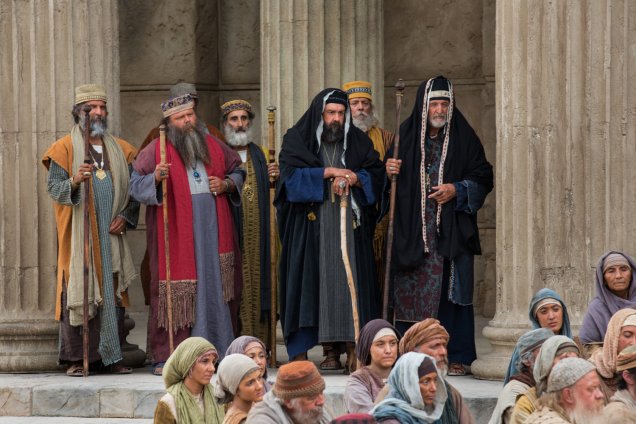
I was recently inspired to pick up and read the book, Accidental Pharisees: Avoiding Pride, Exclusivity, and the Other Dangers of Overzealous Faith by Larry Osborne.

I just finished the book, and it was great.  I couldn’t put it down.

In seeking to live a life pleasing to God and follow well after Jesus, I want to be sure that I avoid the trap of judgement, condemnation, comparison and an attitude of spiritual arrogance that has been so painful for me to witness in others (and in my own heart, at times).  I want to focus on being Jesus’ loving representative to everyone I come in contact with and let God sort out the rest.  Here are some excerpts from the book:

“It’s about accidental Pharisees – people like you and me who, despite the best intentions and a desire to honor God, unwittingly end up pursuing an overzealous model of faith that sabotages the work of the Lord we think we’re serving.” (p.17)

“You’ve probably know a jerk for Jesus, someone who thought they were advancing the cause of the kingdom when in reality they were simply embarrassing the King.” (p.18)

“If you allow your frustration to turn into disgust and disdain for people you’ve left behind, you’ll end up on a dangerous detour.  Instead of becoming more like Jesus, you’ll become more like his archenemies, the Pharisees of old, looking down on others, confident in your own righteousness.” (p. 20)

“Sometimes I wonder if in our quest to purify the church, we’ve become more like Pharisees than like Jesus.  Accidental Pharisees perhaps.  But Pharisees nonetheless.” (p.37)

“Spiritual comparisons are particularly silly.  We don’t always know the full story.  All we see is the outside.  There’s no way to see the heart.  This means that a lot of our conclusions about people are flat-out wrong.” (p.44)

“Spiritual arrogance is not a back-of-the-line sin: it’s a front-of-the-line sin.  So much so that sometimes I think of it as an occupational hazard of zealous faith, serious discipleship, and biblical scholarship.”  (p.46)

“But as valuable as biblical knowledge is, I think it should come with a warning label.  The fact is, the more we know, the more we’re tempted to look down on people who don’t know what we know.”  (p.59)

“But there is something worse than settling for mediocrity.  It’s exclusivity.  It’s the temptation to up the ante and to raise the bar of discipleship so high that it disqualifies all but the most committed, and thus thins the herd that Jesus came to expand.”  (p. 69)

“The truth is that Jesus didn’t come to raise the bar.  He didn’t come to weed out the losers.  He came to turn losers, laggards, and enemies into full-on sons and daughters of God.”  (p.84)

“We have no right to judge people whom God accepts.  We have no right to look with contempt upon people whom God loves.”  (p. 101)

“Second, we seldom speak directly to those in need of correction.  I find it interesting that the apostle Paul never wrote any letters that criticized other churches.”  (p.132)

“We’re stuck with each other.  We have to learn to get along.  We’re united by Jesus, not by choice.  And nothing is going to change that.  Our biblical unity is rooted solely in our relationship with Jesus.  It’s not dependent on shared religious practices, patterns, or preferences.  It’s not contingent on agreeing on every point of theology.”  (p.140)

“But uniformity is not what Jesus died for.  He didn’t come to break down the dividing walls that separated Jews and Gentiles, slave and free, women and men so that we could coalesce around a boring, blended, homogeneous middle.  Quite the contrary.  He came to save us in our differences, not from them.”  (p.140)

“We become accidental Pharisees when we lay down boundary markers that are narrower than the ones laid down by Jesus and then treat people who line up on the wrong side of our markers as if they were spiritual impostors or enemies of the Lord.”  (p.142)

“I am saying that our definitions of what it means to be a genuine Christ follower must include room for the weak and the struggling, the frightened and the failing, in order to remain aligned with Jesus rather than with the Pharisees of old.”  (p.195)

Sons

Since I wasn’t going to finish one of the longer books that I am reading to make #40 by yesterday, I picked up a small book we had on our bookshelf called Sons: Life’s Greatest Pride, Worry and Joy by Bonnie Louise Kuchler.  The book has pictures and some great quotes about sons.  Some of my favorite quotes are (starting with my ultimate favorite first):

  • “If someone were to ask me what has been my biggest accomplishment in life, I would lift my head high and speak from my heart with a parent’s pride as I said the words ‘my son’.”  Andrea Adaire Fischer
  • “Son, I love you.  That’s never at stake.  Never, never, never at stake.” Kirk Cameron, American actor and producer
  • “Success isn’t a result of spontaneous combustion.  You must set yourself on fire.”  Arnald Henry Glasaw (1905-1998) American businessman and humanist
  • “To be yourself in a world that is constantly trying to make you something else is the greatest accomplishment.” Ralph Waldo Emerson (1803-1882) American poet and essayist
  • “The greatest conflicts are not between two people but between one person and himself.” Garth Brooks, American singer and songwriter
  • “I have a son, who is my heart.” Maya Angelou (1928-2014) American poet and author

I am so proud of my three sons.  Being their dad has been the greatest responsibility, joy and honor of my life.  I have so much fun with them.  They remind me of a few things in life:

  • Don’t take myself too seriously.  Laugh a lot.  It is fun to make others laugh.
  • God is so good and generous.
  • Treasure each moment, each experience.
  • God wants to use my sons and my experiences with them to teach me, to help me grow up in Christ.
  • God’s love is extravagant.  I love my sons so much, and I would do anything for them.  That deep love I have for them is a glimpse of God’s love for me.  Blows my mind.